


Imagine your business poised to leap ahead in an increasingly AI-driven market — not because AI runs it autonomously, but because your business is perfectly prepared for AI integration. Many companies fall into the trap of believing AI will magically run their operations with no groundwork. However, as John Juretich, of Digital Media Marketing, explains, the true question is: “Is your business ready for AI?” This comprehensive guide breaks down the four essential business areas every organization must prepare meticulously for AI integration to realize measurable, competitive success.
Understanding AI Integration Business Areas: Setting the Stage
Explore the common misconceptions about AI integration in business
Discuss why readiness matters more than just adopting AI tools
Introduce the four key business areas essential for AI integration
AI integration is often surrounded by hype and misunderstandings. A common misconception is that AI can immediately take over and run your business flawlessly. This belief creates two distinct camps: one that says “Just wait for AI to take over,” and another that stresses “Is your business ready for AI?”
John Juretich, of Digital Media Marketing, highlights this crucial point: “The real issue is your business ready for AI? Because AI by default is trained to be a generalist, but your business is a specialist. ” What he means is that AI starts from a broad perspective, while your business operates in a specific niche, with unique tools, expertise, and workflows tailored to your industry.
Therefore, the essential factor determining AI success is your business’s readiness, not merely adopting AI tools. This readiness spans four key business areas—Sales and Marketing, Fulfillment of Products and Services, Operations and Administration, and Customer Service—that must each develop a solid foundation for AI to deliver true value.

Breaking Down the Four Key AI Integration Business Areas
Sales and Marketing: Building a Solid Source of Truth
Define the importance of a clear sales and marketing source of truth for AI
Explain the four core components: brand identity, brand voice, brand gallery, and product/service definitions
Highlight how consistent messaging drives better customer experience and operational efficiency
To harness AI’s power in sales and marketing, a business must establish a clear, unified “source of truth. ” This means having an official, documented set of guidelines and definitions that the entire team—and the AI tools—can rely on consistently.
Juretich warns, “If your company’s truth lives in people’s heads or scattered notes, AI will fill in the gaps with generic output. Generic doesn’t win. ” Without this clarity, AI-produced content and messaging risk being vague and ineffective, which alienates customers and dilutes brand identity.
The sales and marketing source of truth rests on four pillars:
Brand Identity: The visual and conceptual backbone of your business — logo, colors, mission, vision, values, and detailed customer profiles like demographics and empathy maps. This defines who you serve and how you approach them.
Brand Voice: How your business communicates — tone, style, and word choices that reflect your personality and resonate with your audience. It’s crafted separately from your mission and vision, ensuring distinctiveness in every message.
Brand Gallery: The collection of visual assets and design standards that maintain consistency in all marketing materials, preventing your brand from looking fragmented.
Product and Service Definitions: Detailed, clear descriptions of each offering, highlighting unique differentiators and target customers. For example, distinguishing "organic teeth whitening" from generic whitening ensures AI and staff communicate precisely.
By establishing a solid foundation in these four areas, your marketing becomes consistent, reliable, and scalable through AI support. This clarity accelerates execution and amplifies customer trust.
Fulfillment of Products and Services: Tailoring AI to Specialized Business Processes
Discuss the complexity and specialization in fulfillment processes across industries
Explain the need for expert input to define accurate AI-ready processes
Connect fulfillment accuracy to improved supply chain and operational efficiency
The fulfillment of products and services often involves highly specialized processes that differ widely between industries. Whether it’s manufacturing, logistics, or service delivery, these processes require expert knowledge to articulate accurately for AI integration.
Businesses must collaborate with internal experts to document workflows precisely, ensuring AI systems understand each step and exception clearly. This AI-ready approach helps improve supply chain management, reduces errors, and enhances operational efficiency.
AI’s potential is limited if it lacks accurate and detailed sources of truth in fulfillment operations. By tailoring AI tools to specialized processes, companies optimize their performance and reduce costly disruptions or delays, reinforcing their competitive edge.

Operations and Administration: Streamlining Business Processes with AI
Outline how AI tools can optimize internal operations and administrative tasks
Discuss the role of machine learning in enhancing operational efficiency
Stress the importance of clear, documented business processes for AI integration
Operations and administration form the backbone of a business’s daily functionality. AI tools can significantly boost these areas by automating repetitive tasks, analyzing data trends, and supporting informed decision-making through predictive analytics.
Machine learning algorithms streamline workflows, identify inefficiencies, and even forecast resource needs, helping businesses maintain agility and reduce operational costs. However, success hinges on clear, documented processes that AI can interpret and improve.
Without well-defined operational procedures, AI risks creating inconsistent or ineffective outputs. Therefore, a comprehensive source of truth within operations and administration is critical to aligned execution and measurable improvements.

Customer Service: Enhancing Customer Experience through AI Integration
Explain how AI can improve customer service responsiveness and personalization
Discuss the importance of a well-defined customer service framework for AI tools
Highlight examples of AI-driven customer experience improvements
AI integration in customer service elevates responsiveness and personalization, enabling businesses to meet modern consumer expectations effectively. AI-powered chatbots, virtual assistants, and analytics customize interactions and provide instant support 24/7.
Yet, just like other business areas, successful AI integration requires a clearly documented customer service framework. This framework guides AI in understanding company policies, escalation paths, and customer interaction standards, ensuring consistent and relevant responses.
Examples of AI-driven improvements include faster complaint resolution, personalized recommendations, and proactive engagement based on customer behavior patterns. A well-prepared AI system enhances customer satisfaction and loyalty, key drivers for long-term business success.

Integrating AI in Small Business: Challenges and Opportunities
Address unique challenges small businesses face in AI integration
Provide strategies for small businesses to prepare their business processes for AI
Discuss how generative AI and computer vision can be leveraged effectively
Small businesses often face resource constraints and limited technical expertise when adopting AI, which can make integration daunting. However, AI also presents significant opportunities for them to level the playing field with larger competitors.
To prepare effectively, small business owners should start by documenting sales and marketing processes, building a clear source of truth. From there, they can gradually define fulfillment, operations, and customer service workflows, leveraging experts as needed.
Generative AI can assist with content creation and personalized marketing, while computer vision can improve inventory management and quality control. With strategic planning and phased execution, small businesses can achieve meaningful AI benefits that enhance efficiency and customer engagement.
Common Misconceptions About AI Integration in Business Processes
Debunk myths such as AI running the business autonomously
Clarify the role of AI as a tool requiring clear input and business readiness
Explain why generic AI solutions often fail without specialized business data
A widespread myth is that AI can independently run a business flawlessly. In reality, AI functions as a sophisticated tool that requires clear, structured data and business readiness to be effective.
Generic AI applications without business-specific inputs produce generic outputs that fail to capture your brand’s uniqueness or operational nuances. As John Juretich states, “AI will be choosing the business that sees and dominates the market based on whether the business is ready for AI or not. ”
This truth underscores the need to prepare and document key processes thoroughly, creating a solid foundation for AI tools to deliver valuable, tailored results rather than one-size-fits-all solutions.
Actionable Steps to Prepare Your Business for AI Integration
Conduct an audit of your current business processes and data sources
Develop and document a comprehensive source of truth for sales and marketing
Engage experts to define fulfillment, operations, and customer service processes
Implement AI tools aligned with your documented business processes
Continuously update and refine your source of truth as products and services evolve
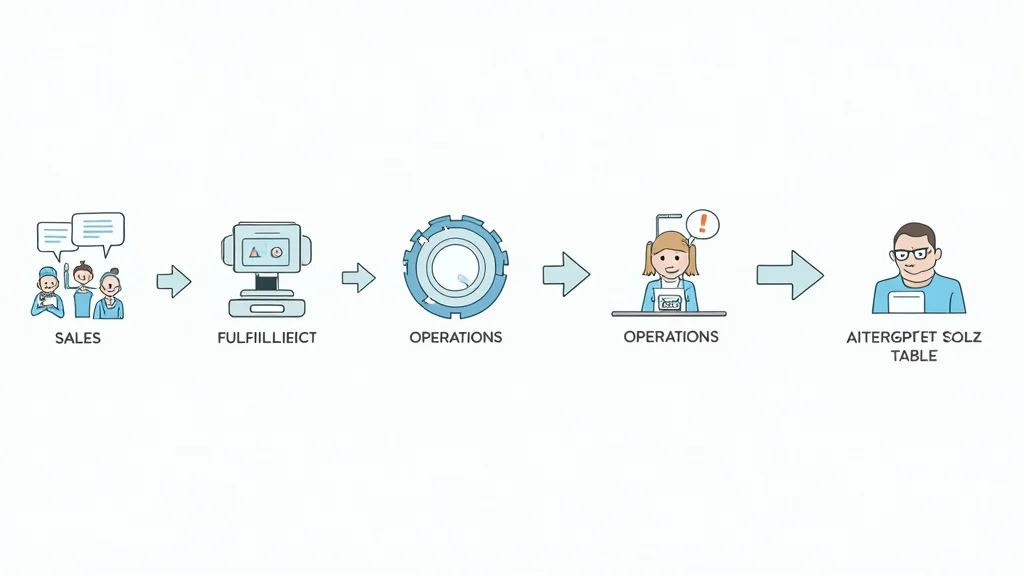
Following these steps builds a sustainable AI integration strategy, transforming your business into a specialized, AI-ready organization poised for market dominance.
What You'll Learn
How to identify and prepare the four key business areas for AI integration
Why a clear source of truth is critical for successful AI adoption
Expert insights on overcoming common AI integration challenges
Practical frameworks to align AI tools with your unique business processes
Frequently Asked Questions About AI Integration Business Areas
What does 'source of truth' mean in AI integration?
A source of truth is the official, agreed-upon documentation of how your business operates in key areas, ensuring AI has reliable data to work with.
How can small businesses start preparing for AI integration?
Start by documenting your sales and marketing processes, then gradually define fulfillment, operations, and customer service with expert help.
Can AI replace human expertise in specialized business processes?
No, AI complements human expertise but requires clear, specialized input to function effectively in niche business areas.
Key Takeaways
AI integration success depends on business readiness, not just technology adoption.
A well-defined source of truth in sales, marketing, fulfillment, operations, and customer service is essential.
Businesses that prepare their processes for AI will gain competitive advantages.
Expert guidance and continuous process refinement are critical for effective AI use.
Conclusion
Preparing your business for AI integration requires a strategic approach focused on clarity and specialization.
By building solid sources of truth and aligning AI tools with your unique business processes, you position your company for future success.
As John Juretich advises, readiness is the key differentiator in the evolving AI-driven market landscape.




Write A Comment